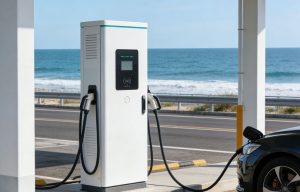
For renewable energy operators, the coastline represents both a goldmine of opportunity and a graveyard for equipment. While coastal regions offer ideal conditions for wind and solar integration, the environmental conditions—characterized by high humidity and chloride-rich salt spray—are relentless. A single breach in an Energy Storage System (ESS) enclosure can lead to catastrophic failure of sensitive power electronics, resulting in massive downtime and financial loss. At San Jun Hardware, we understand that «surviving» the coast is not enough; infrastructure must thrive. Since 2010, we have specialized in custom sheet metal fabrication, providing high-precision enclosures for industries ranging from medical and education to global new energy and power sectors.
The Science of Survival: Why Coastal Environments are Harsh for ESS
Near the coast, chloride ion levels in the air frequently reach as much as 50mg/m³. High humidity combines with this chloride and forms an active electrolyte. This mixture greatly speeds up corrosion on metal surfaces. Ordinary cold-rolled steel enclosures, even those with simple coatings, usually start showing rust after about twelve months. Such early damage puts the normal 15-to-20-year service life of current ESS units at serious risk.
Standard enclosures often fail because they rely on generic designs that do not account for the microscopic ingress of salt particles. These particles settle into seams and joints, eventually corroding the structure from the inside out. For an ESS, which generates significant heat during 480kW+ UHV (Ultra-High Voltage) operations, the need for ventilation often creates a conflict with the need for total environmental sealing.
Material Selection: The Foundation of Coastal Resilience
The first line of defense is the choice of material. At San Jun Hardware, our material science approach is scenario-driven.
Upgrading to 316 Stainless Steel for Superior Corrosion Resistance
In regard to custom digital signage housings as well as ESS cabinets that will be used outside, 316 stainless steel (G 4305 JIS) is actually a material that we recommend over the use of 304 on a fairly regular basis due to the addition of molybdenum, so that salt-spray corrosion resistance can be increased by a margin of 50%, making 316 the gold standard for use near the ocean.
Utilizing 6061-T6 Aluminum for Thermal and Weight Efficiency
While the outer shell provides protection, the internal components—such as brackets for battery modules—require a different approach. We utilize 1.2mm 6061-T6 aluminum alloy, which is 30% to 35% lighter than carbon steel. This lightweight property is essential for the portability of large-scale ESS units during field installation. Furthermore, its high thermal conductivity (with a tensile strength of 276 MPa) ensures that heat generated by high-power components is dissipated efficiently, preventing module failure.
Advanced Manufacturing Processes: Precision for Performance
Material is only as effective as the craftsmanship behind it. San Jun Hardware utilizes a 5,000-square-meter facility equipped with AMADA CNC technology to ensure that every custom enclosure meets «military-grade» precision.
Ultra-Precise Fiber Laser Cutting and CNC Bending
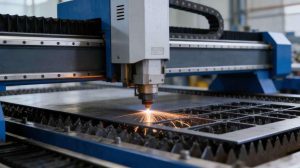
We utilize 4000W fiber laser cutters with a tolerance of ±0.05mm. This precision is critical for creating functional hole patterns—such as 6mm-diameter heat dissipation matrices—that optimize airflow without compromising the structural integrity of the cabinet. Our AMADA 8-axis CNC press brakes allow us to form complex shapes with a ±0.1° bend tolerance. For our IP65 and IP55 enclosures, we use a 5mm edge-folding design to ensure a perfect, airtight fit between the door panel and the main frame, which is the foundation of waterproof performance.
The Art of Sealing: Achieving IP65 and IP55 Standards
Whether we are building a hospital self-service kiosk enclosure or a coastal ESS cabinet, sealing is paramount. We integrate EPDM rubber gaskets and precision-machined frame recesses to achieve IP54 and higher protection ratings. By using 0.05mm-step adjustable hinges, we calibrate gaps to an average of 0.25mm, ensuring that dust and moisture are effectively locked out.
Innovative Engineering Solutions: Solving the Heat-Water Paradox
One of the greatest challenges in ESS design is balancing IP-rated protection with cooling requirements.
Louver-Type Heat Dissipation with Waterproof Membranes
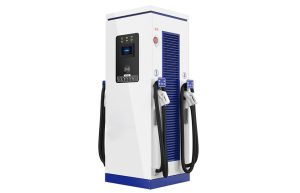
To solve this, San Jun Hardware engineers use fluid dynamics simulation to optimize hole layouts. We often implement a «louver-type» inclined design, where holes are angled downward at 30° to repel rainwater. Inside these vents, we install waterproof, breathable membranes that block water molecules while allowing air circulation, keeping internal temperatures below 38°C even in 45°C ambient heat.
Structural Integrity Against Coastal Wind Loads
Coastal units must also withstand high wind pressure. Our enclosures are tested via Finite Element Analysis (FEA) to ensure they can resist lateral wind loads of 500N without deformation. By adding «reinforced rib» structures at key stress points through CNC bending, we increase structural strength by 40% without unnecessarily increasing material thickness or weight.
Comprehensive Surface Treatments: Multi-Layered Protection
A premium metal enclosure is defined by its finish. Our three-stage surface treatment process ensures long-term aesthetics and durability.
Passivation and UV-Resistant Powder Coatings
For stainless steel, we perform nitric acid passivation to form a dense 5μm oxide film. This is followed by a UV-resistant electrostatic powder coating (typically 60μm thick). This treatment is designed to resist fading, cracking, and peeling under the intense tropical sun, maintaining a color difference of ΔE ≤1 even after simulated years of exposure.
Rigorous Quality Control: 1500-Hour Salt Spray Testing
To validate our processes, we subject samples to 1500-hour salt spray testing (JIS Z 2371), far exceeding the standard 1000-hour industry request. This commitment to quality has led to a 100% pre-delivery inspection pass rate across our major coastal projects.
San Jun Hardware: Your Strategic Partner for Global Customization
At San Jun Hardware, we are more than just a manufacturer; we are a strategic partner in your supply chain.
lOEM/ODM Technical Support: We invest 10% of our annual profits into R&D to stay ahead of market trends, providing one-stop solutions from initial 3D CAD design to final assembly and packaging.
lFlexible and Scalable Production: Whether you need a low-volume prototype or a 2,000-unit mass production run, our automated robotic systems ensure consistency across every batch.
lGlobal Supply Chain and Price Competitiveness: We offer «military-grade quality at an affordable price». Our products are currently deployed globally, from Southeast Asian smart cabinets to European retail POS stations.
img.Custom Sheet Metal Enclosure for POS Terminal Stations.jpg
Conclusion: Reliability Beyond the Horizon
Surviving the high humidity and salt spray of coastal environments requires a masterful blend of material science, precision engineering, and rigorous testing. San Jun Hardware has proven its ability to deliver enclosures that maintain their integrity under the most demanding conditions. From hospital kiosks to heavy-duty ESS enclosures, we provide the metal-based «guardian» your technology deserves.
FAQ
Q: Why are coastal areas problematic for ESS enclosures?
A: The presence of humidity in the air and the drifting salt particles contribute to the corrosion process by allowing the chloride ion particles to penetrate the joints.
Q: What material is suited for the outdoors when situating an ESS?
A: 316 stainless steel resists salt spray better, while 6061-T6 aluminum alloy offers strength and good heat dissipation properties.
Q: How do ESS Enclosures provide simultaneous cooling as well as waterproof protection?
A: Engineered louver vents, along with waterproof, breathable membranes, facilitate airflow with protection against moisture, keeping internal temperatures safe without hindering IP ratings.
Q: How is resistance against corrosion of coastal ESS enclosures established?
A: Enclosures also go through extended salt spray tests that can reach up to 1500 hours to ensure they remain durable enough to suit coastal environments.